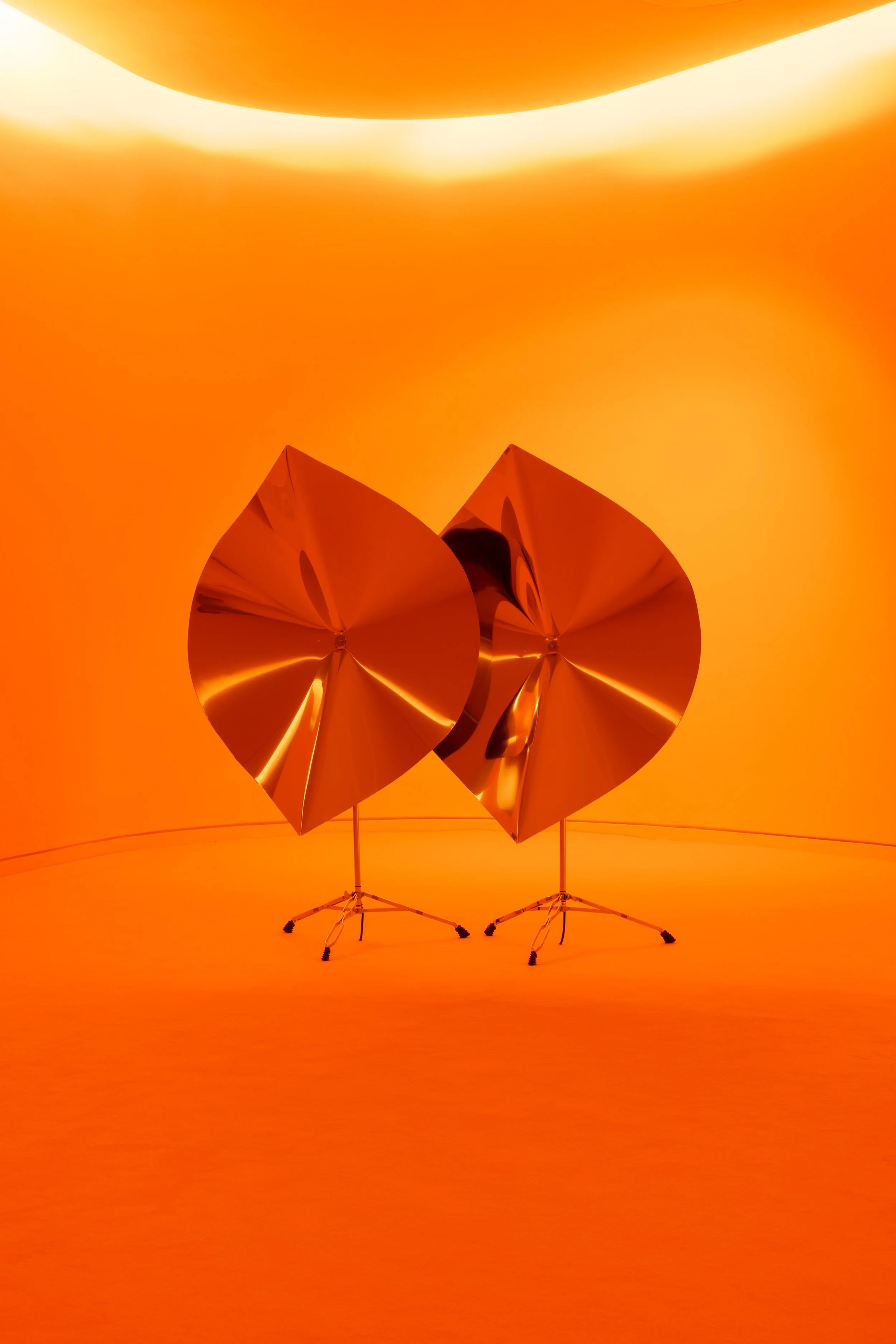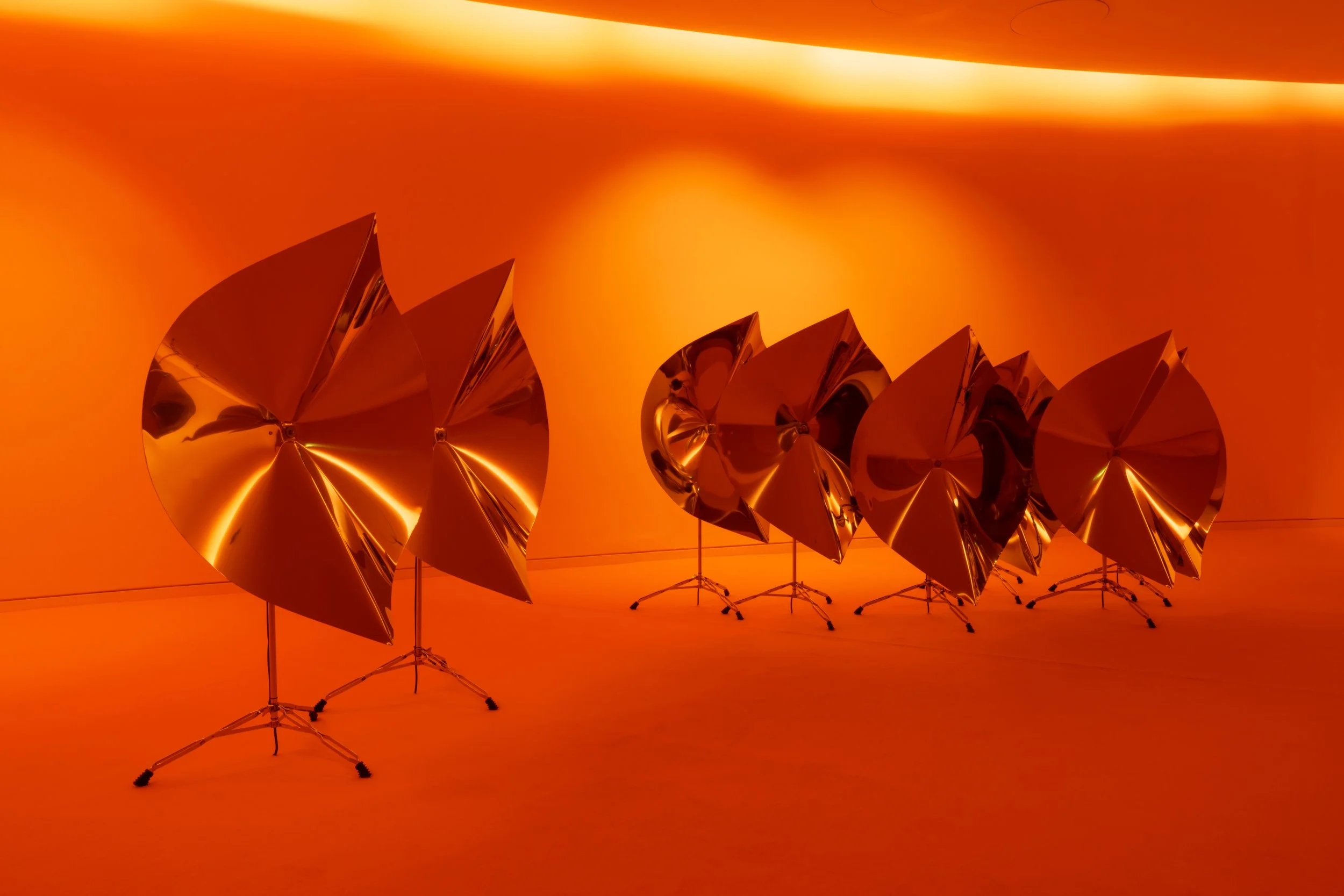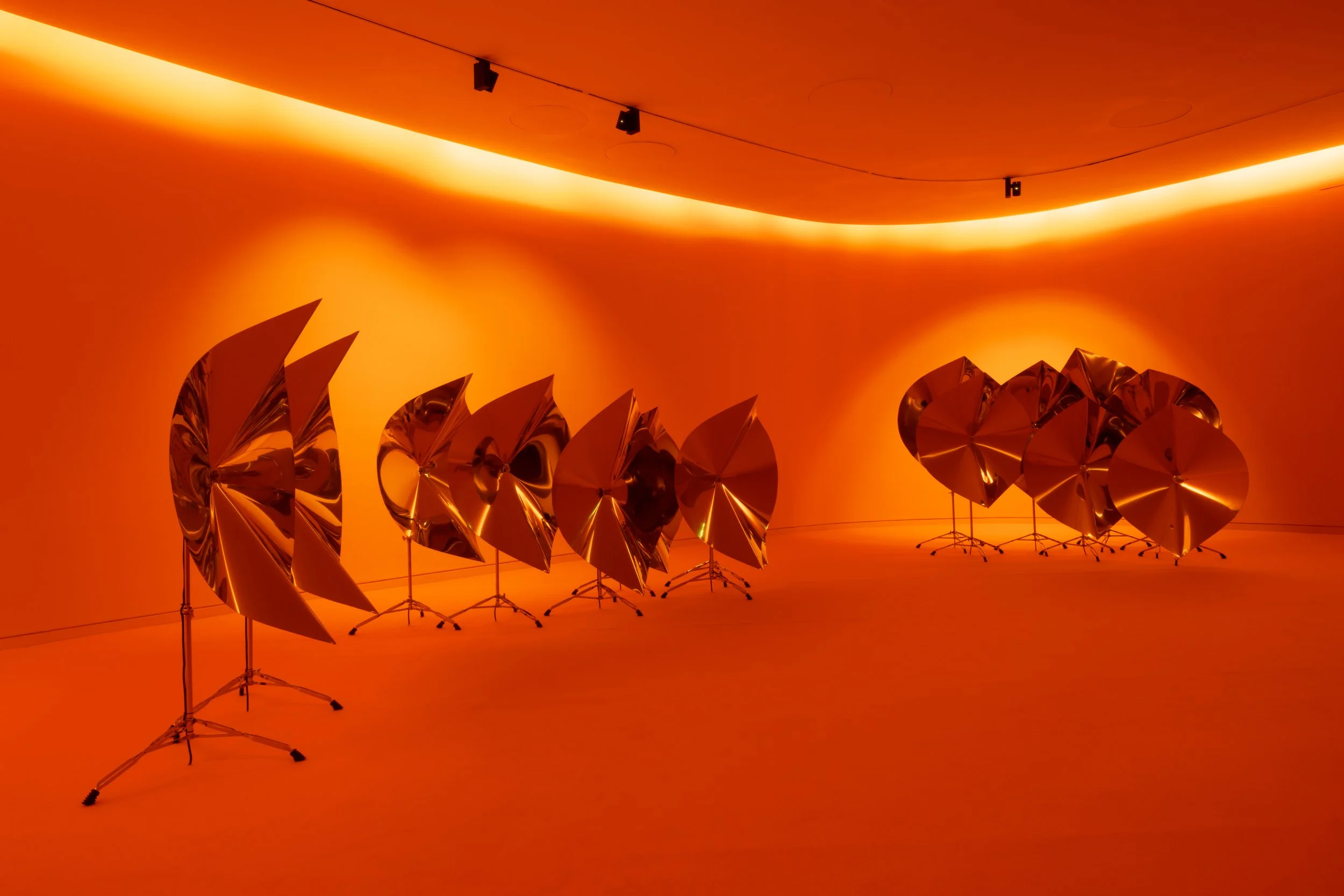
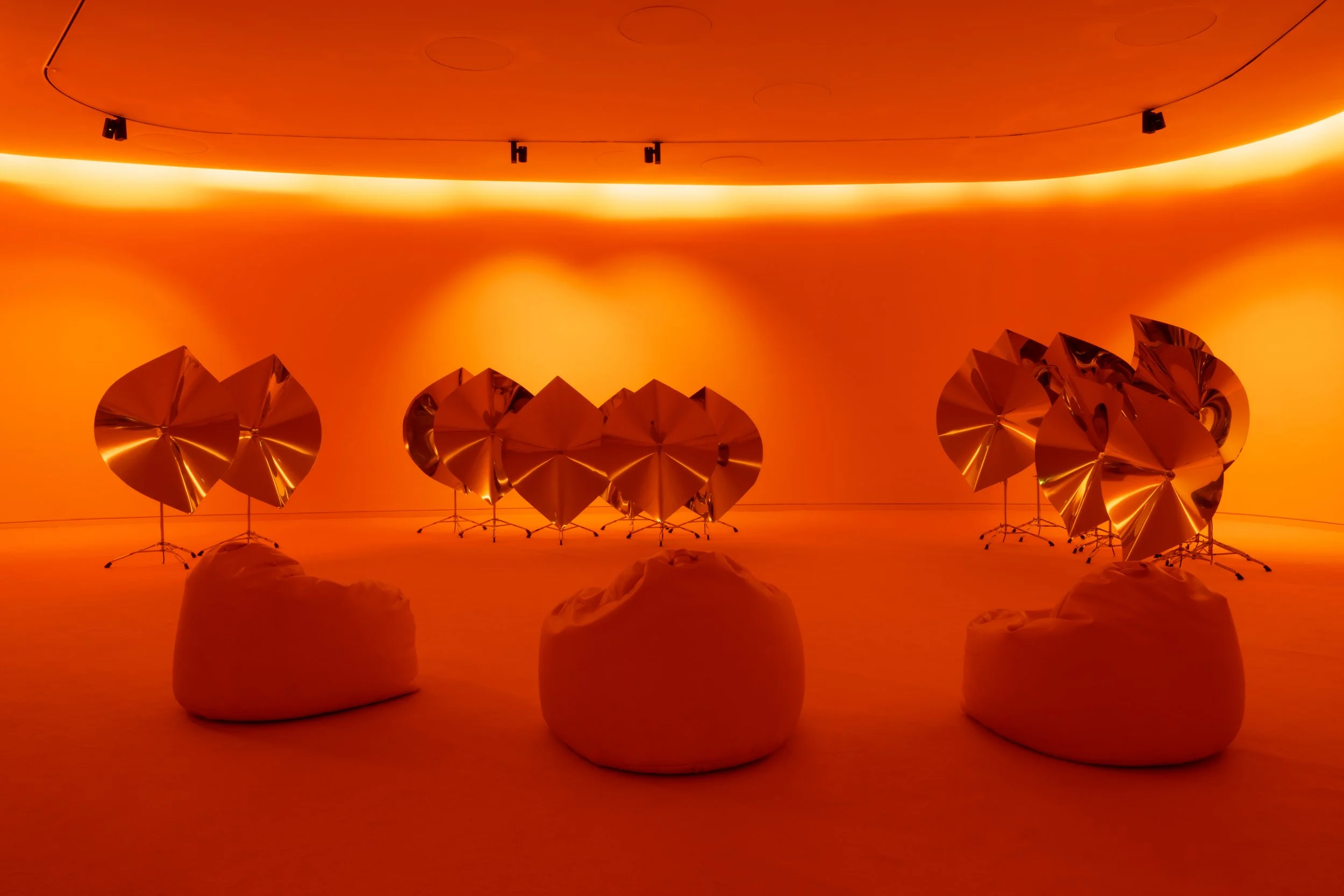
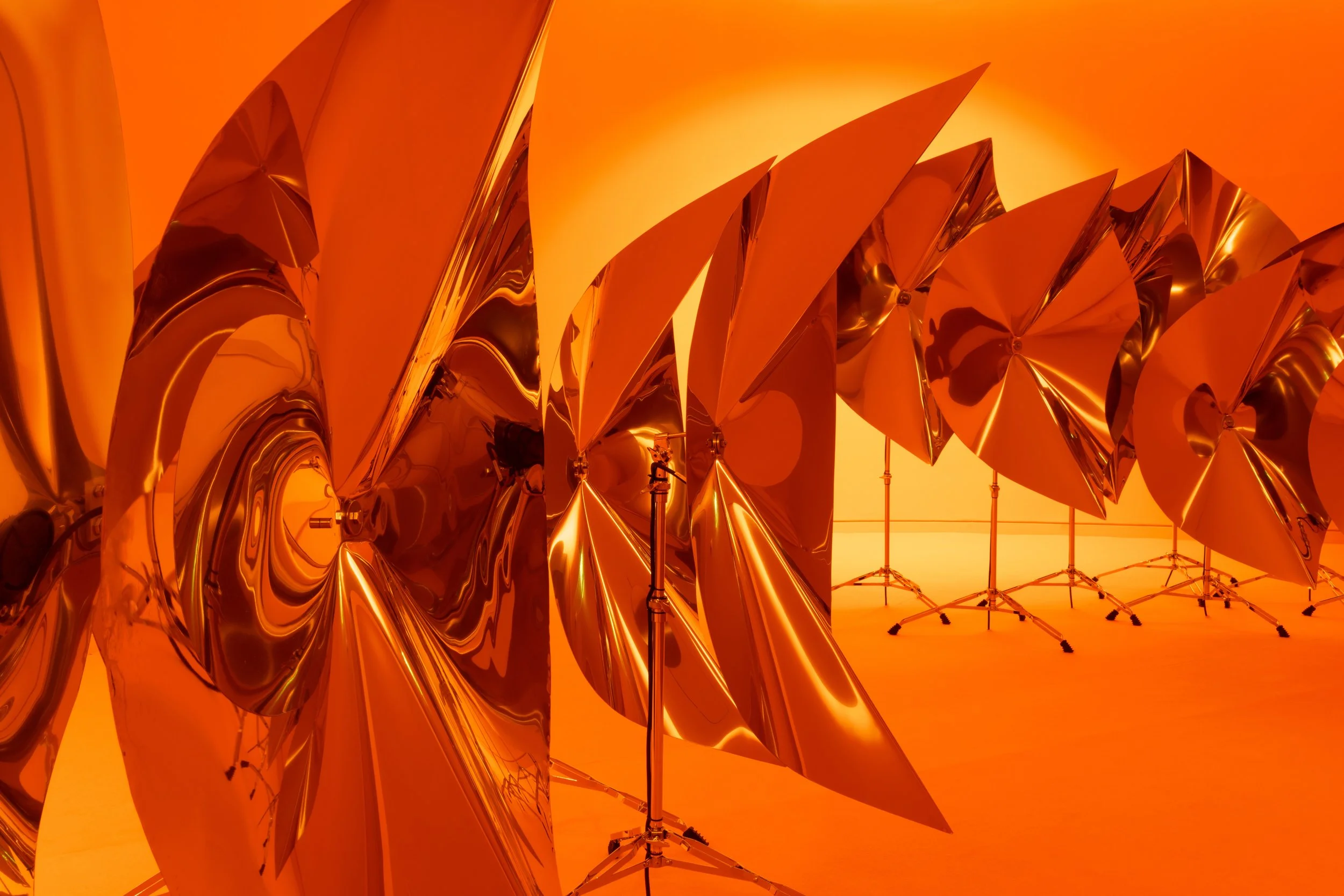
View of the exhibition João Pimenta Gomes - New Age, 2026. Photo: Pedro Tropa_tpst. Courtesy of EDP Foundation/MAAT.
Curator - Bruno Marchand
“This is the dawning of the age of Aquarius.” If this line does not bring a particular song to mind, then you are probably too young to know what the term “New Age” means. It refers to a countercultural movement that gained prominence in the 1970s and became associated with an interest in Eastern spiritual practices, meditation, and the expansion of consciousness, fuelling a widespread optimism arising from the supposed entry of the planet into a new astrological era: the Age of Aquarius. As is always the case with this sort of social phenomena, this movement was accompanied by a range of artistic manifestations – from the visual arts to literature, from cinema to music – that helped consolidate its most distinctive features. Psychedelia is perhaps the expression most readily associated with this new era; yet all the cultural production of the period revealing an ambition to achieve not only a certain kind of enlightenment (that is, a transcendent knowledge of what we are and of our purpose in the world) but also a profound connection to matter in its diverse forms (i.e, a kind of absolute immanence) has a place within the New Age universe.An adherent of this movement sees no distinctions between disciplines, modes of expression, or techniques. Forms possess a transversal value, meaning that they can take shape in vastly different ways whilst continuing to address the same thing. For such an adherent, moreover, and contrary to a famous high-culture cliché (“art for art’s sake”), forms do serve a purpose: they give us access to deeper levels of our existence – levels where self-awareness, relativisation, and empathy are heightened. Now, this may very well be the worst nightmare of late capitalism: a stage of development that depends heavily on specialisation, and that would implode if we were ever to reach a point of homeostasis which could free us from both our desires and our aspirations.João Pimenta Gomes is one of those artists who move freely between different creative fields. Whilst he first came to public recognition primarily through music, his work in the visual arts has established, from the outset, a dynamic of cross-contamination between the two. It is not difficult to understand why: musical instruments are peculiar functional sculptures in themselves. Born of a profound knowledge of acoustics and ergonomics, they become prostheses designed to express our (highly variable) musical proficiency. They are also aesthetic markers: vehicles of material culture, identity, and style, functioning as testaments to an intention and a history. Pimenta Gomes is, first and foremost, an avid collector of all kinds of instruments and technical apparatuses, both analogue and digital, that were ever used to make, record, or disseminate music. This is not merely an investigative urge: indeed, it is precisely from this historical and material legacy that his artistic projects unfold.
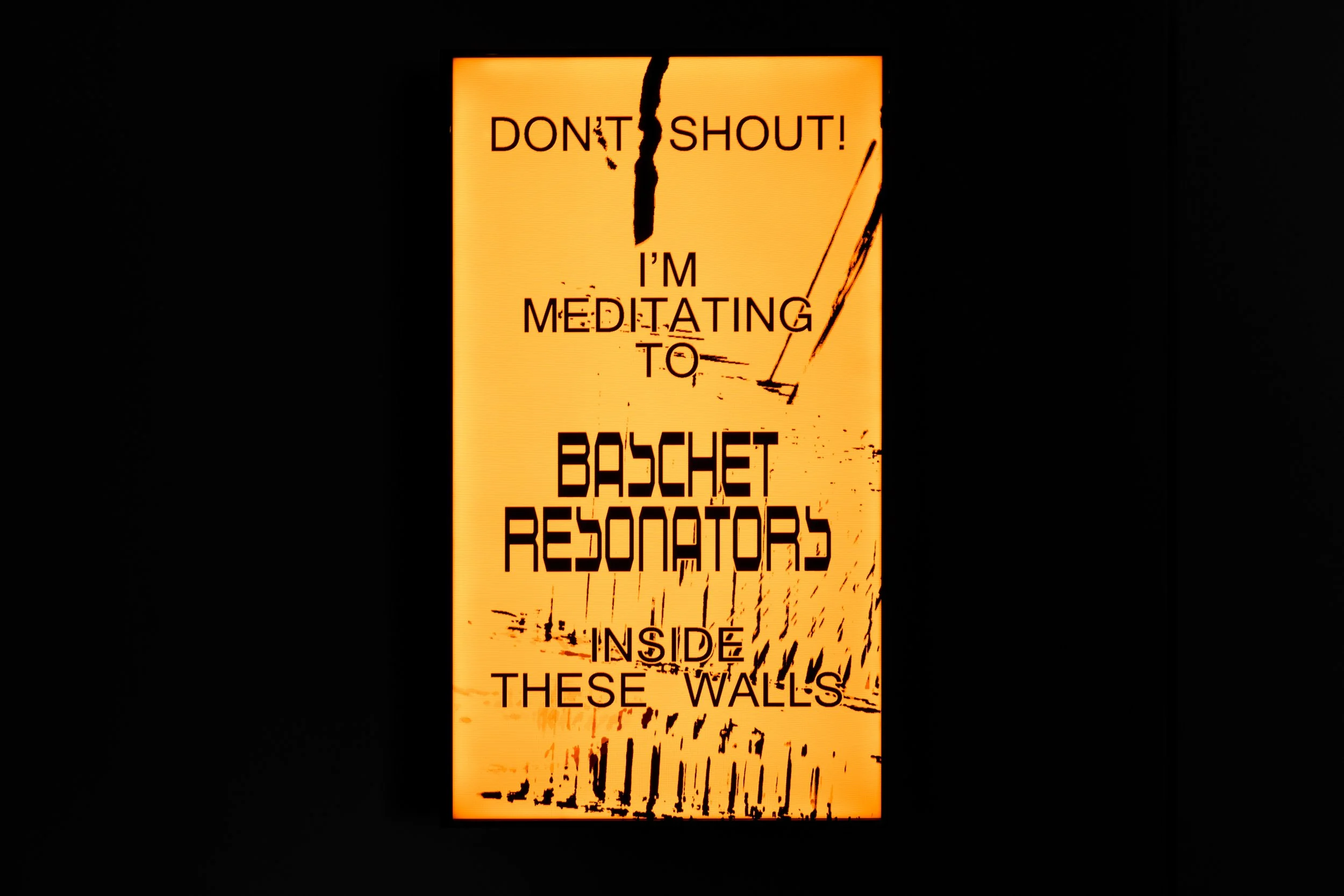
New Age was conceived around a little-known instrument: the Cristal Baschet, developed in France in the 1950s. Its resonators – aluminium plates shaped like petals or elliptical leaves – were appropriated, made autonomous, and replicated to form the sculptural installation now presented at the museum. Behaving like acoustic loudspeakers, these membranes are activated by coupled emitters that transmit the vibrations of a set of voices recorded and processed by the artist; their sound, if transmitted by any other means, would bear no resemblance to what we hear here. For in this work, as in so many others by Pimenta Gomes, the aim is not to reproduce sounds but rather to produce a composition whose main instrument, and sole instrumentalist, is the sculpture itself.
What this ensemble of pieces produces is neither exactly music nor just sound: it is the polyphony of a chrome choir, each voice merging into the one right next to it in a delicate symphony of reverberations. Whilst the unique architecture of MAAT’s Studio Room determined the number of sculptures included, the distances and angles between them were meticulously set by the artist in order to endlessly nourish and sustain this veritable audio-sculptural ecosystem. What it conveys lies somewhere between sonic abstraction and an “affect” (in the Deleuzian sense), at once immanent and transcendent: a proto-musical flow; a sinuous intensity inscribing itself upon our bodies with the force of a mantra, unfathomable and infinite
Bruno Marchand